AI-Powered Vision Systems Boost Recycling Efficiency in Real Time
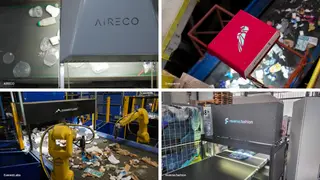
Nvidia's Vision AI and robotics technologies enable recyclers to identify and sort valuable materials from mixed waste streams on conveyor belts, including used clothing and plastic bottles. The system diverts thousands of tons of recyclable material from landfills annually by improving sorting accuracy. This application demonstrates how AI accelerates sustainable industrial processes through real-time decision-making.
Nvidia’s Vision AI and robotics technologies are being deployed to enhance real-time sorting of recyclable materials on conveyor belts within waste processing facilities. These systems identify valuable items such as used clothing and plastic bottles from mixed waste streams, significantly improving sorting accuracy. By leveraging AI-powered vision, the technology diverts thousands of tons of recyclable material from landfills annually, demonstrating a tangible impact on waste reduction. The system operates in real time, enabling rapid decision-making that traditional methods cannot match. While specific locations, dates, or facility names are not provided, the application is part of a broader trend toward integrating AI accelerators into industrial sustainability efforts.
The development reflects growing industry interest in using AI to optimize resource recovery, driven by increasing environmental regulations and corporate sustainability goals. Prior advancements in machine vision and robotics laid the groundwork for real-time material identification, but recent improvements in AI accelerator chips—like those developed by Nvidia—have made such systems more efficient and scalable. The companies involved, particularly Nvidia as a provider of the underlying compute infrastructure, stand to benefit from expanded adoption in industrial automation. Recyclers and waste management operators aim to reduce landfill dependency and increase material recovery rates, aligning with broader circular economy objectives.
It remains unclear how widely this technology is currently deployed or which specific recyclers are using it. The long-term scalability, cost-effectiveness, and integration challenges across different waste streams are still unresolved. Future developments may include expanded use in other sorting applications or integration with automated robotic arms for physical separation.
The deployment of AI-powered vision systems in recycling could significantly reduce landfill waste and improve material recovery rates, directly benefiting environmental sustainability and resource conservation. Communities near waste processing facilities may experience cleaner local environments, while municipalities and waste management firms could lower disposal costs and meet regulatory targets more easily. This technology may also influence consumer behavior by reinforcing the value of recyclable materials, potentially increasing participation in recycling programs. A comparable precedent is the use of AI in automated sorting at mining operations, where real-time analysis improved ore extraction efficiency. Similarly, this application may catalyze broader adoption across industrial sectors seeking to optimize resource use through intelligent automation. The market for AI accelerators in industrial settings could expand rapidly if proven effective at scale. However, challenges such as data privacy, system reliability, and workforce displacement remain uncertain. What to watch for next is whether these systems will be adopted beyond pilot programs and how regulatory bodies may respond to their integration into environmental compliance frameworks.