Corrected Study Clarifies Role of Histone Modification in RNA Regulation
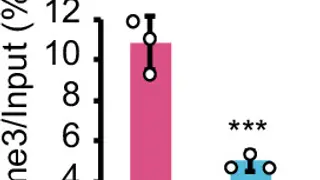
A correction has been issued for a previously published study that identified how methylation of histone H3 at lysine 36 influences the co-transcriptional addition of m6A RNA modifications. The error involved duplicated data points in one figure's source data, which affected individual data plots but not the overall statistical conclusions. The corrected figure and updated data have been made available to ensure reproducibility.
A correction was issued on 9 November 2026 for a landmark 2019 study published in Nature, which had proposed that histone H3 trimethylation at lysine 36 (H3K36me3) guides the co-transcriptional addition of m6A RNA modifications. The error involved a copy–paste mistake in the source data for Extended Data Figure 4h, where ACTB zipcode-2, shSETD2#2 values were incorrectly duplicated from EEF1A, shSETD2#2 entries. This affected only individual data points in the figure, not the mean values, error bars, or statistical significance (P values), which remained unchanged. The corrected figure and updated supplementary data have been made publicly available to ensure reproducibility. The original study, led by researchers from City of Hope, University of Chicago, Sun Yat-sen University, and Cincinnati Children’s Hospital Medical Center, was widely cited in epigenetics and RNA metabolism fields for linking chromatin modifications to post-transcriptional regulation. The error arose during data processing, not in experimental design or analysis, and the core conclusions about H3K36me3's role in guiding m6A deposition remain valid. The authors, including Chuan He (a pioneer in m6A research), Jianjun Chen, and Huilin Huang, have maintained transparency by issuing a formal correction with full data disclosure. What remains unresolved is whether the duplication affected any downstream interpretations or follow-up studies that may have built upon the flawed figure without rechecking the source data.
This correction could affect ongoing research in epigenetics and RNA regulation, particularly studies exploring crosstalk between histone modifications and RNA modifications. While the statistical conclusions are unchanged, researchers relying on the original figure may need to reassess their own analyses or citations. The incident underscores the importance of rigorous data validation in high-impact journals, especially when findings influence drug discovery pathways in cancer and neurodegenerative diseases where m6A is implicated. A comparable case is the 2014 retraction of a Nature paper on stem cell pluripotency due to image manipulation, which triggered broader scrutiny of data integrity in life sciences. This correction may prompt journals and institutions to strengthen pre-publication data checks or mandate open data sharing. The long-term impact could be increased demand for transparent, reproducible practices across genomics and AI-driven biology, where model training depends on accurate biological data. What to watch for is whether similar corrections emerge in other high-profile epigenetics studies involving m6A or histone marks, especially those using computational models trained on public datasets.