Acorn Abundance Predicts Lyme Disease Outbreaks Two Years in Advance
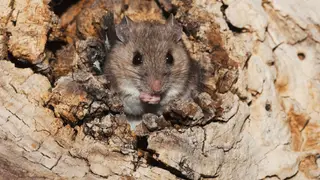
A 35-year study in New York forests reveals that high acorn production in the fall leads to increased survival of white-footed mice, which serve as primary hosts for tick larvae. These mice not only support higher tick nymph survival rates but also efficiently transmit the Lyme disease bacterium, resulting in greater human infection risk two years later. The findings suggest acorn counts offer a reliable early warning system for Lyme disease spikes, surpassing deer population data in predictive power.
A 35-year study conducted in New York State forests, published in the Proceedings of the National Academy of Sciences USA in November 2026, reveals that acorn abundance in the fall predicts Lyme disease outbreaks two years later with remarkable accuracy. The research, led by Richard Ostfeld of the Cary Institute of Ecosystem Studies, tracks a chain of ecological events: abundant red oak acorns in autumn lead to higher survival rates for white-footed mice during winter, resulting in larger mouse populations the following summer. These mice serve as primary hosts for tick larvae, which are far more likely to survive to the nymph stage when feeding on mice. Nymphal ticks are the main vector for Lyme disease in humans, and their infection rate is high due to efficient transmission from infected mice. The study found that acorn counts outperformed deer population data in forecasting human Lyme risk, despite deer being essential for adult tick reproduction. While deer remain critical to the tick life cycle, the research shows that in areas with stable deer populations, fluctuations in tick numbers are more closely tied to mouse abundance driven by acorn availability. The study also noted a counterintuitive effect: warmer winters increased mouse survival but reduced nymphal tick numbers, possibly due to ticks remaining active and depleting energy reserves instead of hibernating. This highlights the complex interplay between climate, host dynamics, and disease transmission. The findings represent a significant advancement in long-term ecological monitoring—rare in tick-borne disease research—and could inform public health strategies. However, it remains unclear whether increased nymph numbers directly correlate with higher rates of Lyme bacteria in ticks, as transmission efficiency varies across animal hosts.
This discovery could transform how public health officials anticipate and prepare for Lyme disease outbreaks, particularly in regions with seasonal tick activity like the northeastern United States. By using acorn counts as a predictive tool, communities may implement targeted surveillance, educational campaigns, or preventive measures—such as tick control in high-risk areas—up to two years in advance. This early warning system may reduce healthcare burdens and improve patient outcomes. The findings also challenge long-held assumptions about deer as the primary indicator of Lyme risk, potentially shifting focus toward ecosystem-level monitoring. A comparable precedent is the use of climate data to predict malaria outbreaks in sub-Saharan Africa, where seasonal patterns inform intervention timing. However, unlike those models, this acorn-based forecast relies on a biological signal rather than meteorological trends. The broader impact may extend to insurance markets, outdoor recreation industries, and urban planning, as communities adapt to shifting disease risk zones. What remains uncertain is how climate change will affect the reliability of this model over time—especially if warming alters acorn production cycles or tick behavior in unpredictable ways. Researchers may need to refine the model across different regions, particularly where oak species or mouse populations vary significantly.