Introducing ToyBlocks: A Simulated Environment for Advancing Robot Learning
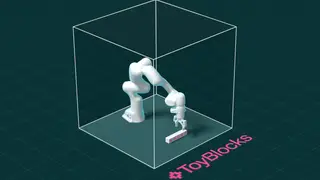
ToyBlocks is a new open-source simulation platform designed to provide a consistent and controlled environment for training and testing robotic systems. It enables researchers to evaluate machine learning models in a reproducible setting with realistic physics and task diversity. The project emphasizes accessibility and collaboration, aligning with open science principles.
ToyBlocks has emerged as a new open-source simulation platform aimed at advancing the development of robotic learning systems. Designed to offer a consistent and controlled environment, the tool enables researchers to train and test robotic systems using realistic physics and diverse tasks. While specific details such as release date, development team, or institutional affiliations are not provided, the project is explicitly positioned as a contribution to open science, emphasizing accessibility and collaboration. The platform’s core value lies in enabling reproducible experiments, a critical need in machine learning research where inconsistent environments can undermine results. By offering a shared, standardized simulation space, ToyBlocks may help reduce the fragmentation of research efforts across institutions and accelerate progress in robotics.
The development of ToyBlocks reflects a broader trend in scientific computing toward open, shared tools that lower barriers to entry and promote transparency. Prior efforts in robotics simulation—such as MuJoCo, Gazebo, or Isaac Sim—have laid foundational work, but ToyBlocks appears to focus on a balance between realism and ease of use, tailored for machine learning applications. The project’s open-source nature suggests it is driven by a community of researchers, possibly from academia or open science initiatives, who seek to democratize access to high-quality simulation environments. What remains unclear is whether ToyBlocks is backed by a specific institution, funded by grants, or developed by a private entity with open-source commitments. The next steps—such as adoption rates, integration with existing frameworks, or community growth—are not yet known.
ToyBlocks could significantly influence how robotics and AI research are conducted, particularly by enabling more consistent and reproducible experiments across labs. Researchers, especially those in underfunded institutions or developing regions, may benefit from free access to a high-fidelity simulation environment, reducing reliance on expensive hardware. This may widen participation in robotics innovation and foster more diverse contributions to the field. In the longer term, such tools may reshape how AI models are validated before deployment in real-world settings, potentially improving safety and performance in applications like autonomous vehicles or industrial automation. A comparable precedent is the rise of open-source frameworks like TensorFlow and PyTorch, which transformed machine learning by standardizing development and accelerating collaboration. ToyBlocks may play a similar role in robotics simulation, though its impact will depend on adoption and community engagement. The platform may also influence funding priorities, encouraging grants to support open tools rather than proprietary solutions. What to watch for includes whether the project gains traction in academic circles, integrates with major robotics libraries, or evolves into a standard benchmarking environment. Its success could signal a shift toward more open, collaborative models in AI and robotics development.