A Fruit Fly's Neural Map Becomes an Unlikely Source of Article Pitches
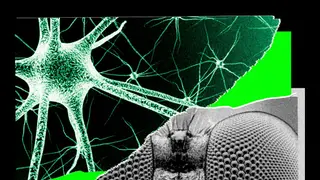
A WIRED reporter used an open-source connectome of a fruit fly's brain to build a website called PitchFly, which generates story ideas by remixing popular headlines from the past year. The project leverages a detailed map of 166,000 neurons and 125 million synapses, simulating a simple form of biological intelligence. The resulting suggestions are often absurd and unconventional, highlighting the gap between algorithmic pattern-matching and human editorial judgment.
The connectome powering PitchFly was developed through a collaboration between Google researchers and multiple academic institutions, mapping a male fruit fly's 166,000 neurons and 125 million synapses. Because the dataset was released open-source in early September, developers quickly repurposed it for various experiments: a Coinbase engineer built StonkFly for stock trading decisions, while others trained fly brains to play Beat Saber, Doom, Minecraft, and Pong. Some virtual fly brains reportedly solved Rubik's cubes, though they struggled with parallel parking in driving simulations.
The project's approach involved scraping hundreds of popular WIRED headlines from the past year, converting them into numerical representations, and feeding them through the connectome. The fly brain lacks any semantic understanding—it simply remixes patterns it has encountered. This wave of fly-brain projects emerged amid broader anxieties about AI's existential risks, with developers noting the philosophical questions these experiments raise about consciousness and replication of biological intelligence.
This project could reshape how newsrooms approach idea generation, demonstrating that algorithmic tools can produce unconventional angles but remain far from replacing human editorial discernment. The broader wave of fly-brain experiments may influence public perception of AI, offering a lighter, more accessible entry point into neural computing discussions. These projects could also spark renewed debate about consciousness and machine intelligence, though their playful nature may help demystify complex neuroscience for general audiences.