A Metric for Measuring Hidden Reasoning in AI Models
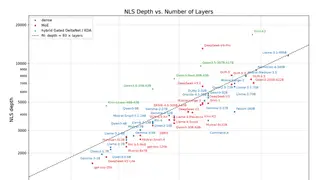
The article proposes a concrete measure to estimate how much unspoken sequential thinking an AI can perform. It aims to help companies disclose the degree to which their architectures enable latent reasoning, aiding oversight. The measure operationalizes the concept of "opaque serial depth" to quantify monitorability.
This story introduces a proposed metric for quantifying the extent to which an AI model’s reasoning happens in a way that is not directly observable to humans. The concept of “opaque serial depth” would measure the number of sequential computational steps that occur without external traceability, offering a way to estimate how much hidden thinking a model performs. By making this measurable, the article suggests that companies could disclose such architectural features, giving regulators and researchers a clearer picture of how much of a model’s decision-making is open to inspection versus effectively private. This fits within broader alignment research efforts focused on interpretability and oversight, where the challenge is not just making models safe but also making their internal processes legible enough to audit.
This metric could affect AI developers, regulators, and end users by creating a standardized way to compare models on transparency. If adopted, it may pressure companies to either reduce hidden reasoning or openly acknowledge its presence, potentially influencing procurement decisions and safety certifications. However, it could also lead to gaming of the metric or oversimplification of complex model behavior. Society may benefit from better-informed oversight, but the measure alone cannot guarantee alignment—only a partial view of model internals.