Exploring Cold Fusion’s Lasting Legacy Beyond Energy Dreams
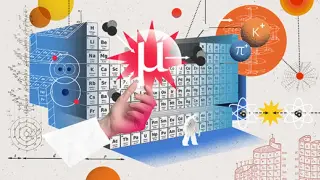
Despite widespread skepticism, cold fusion research continues to push the frontiers of nuclear physics through experiments with exotic atoms and unconventional approaches. While it remains unlikely to deliver practical energy solutions, the field contributes valuable insights into fundamental physical processes. The ongoing work reflects a broader scientific spirit of exploring fringe ideas that challenge established norms.
In March 1989, chemists Martin Fleischmann and Stanley Pons announced at a press conference that they had achieved nuclear fusion at room temperature using a simple electrolytic cell with palladium electrodes and heavy water. They claimed to observe excess heat output far beyond what chemical reactions could produce, suggesting a new form of “cold fusion.” The announcement sparked global excitement, with politicians and media heralding the potential for limitless clean energy. However, attempts by labs worldwide to replicate the results failed, leading to widespread skepticism and a swift scientific backlash. By mid-1989, the initial enthusiasm had collapsed amid revelations of flawed data, including a manipulated graph, and retracted confirmatory studies that later showed signs of deliberate contamination with fusion byproducts. Despite this, research into low-energy nuclear reactions (LENR) persisted in fringe laboratories and under the radar of mainstream physics. In 2026, philosopher Huw Price, known for his work on time and causation at Trinity College, Cambridge, co-authored a paper exploring scientific attitudes toward cold fusion—highlighting how dismissal of such ideas may itself reflect a risk-averse bias. His own paper was rejected by a journal, underscoring the ongoing tension between established norms and unconventional inquiry. The field continues to explore exotic atomic configurations and non-standard nuclear processes, not with the goal of energy production, but as a way to probe the boundaries of known physics.
The story of cold fusion’s legacy reflects broader societal tensions around scientific credibility, risk assessment, and the treatment of fringe ideas. While cold fusion itself remains unverified and unlikely to deliver practical energy, its persistence illustrates how science can benefit from exploring high-risk, low-probability hypotheses—especially those with potentially transformative consequences. The episode may influence how institutions evaluate emerging technologies, particularly in fields like AI or advanced materials where early-stage claims are often met with skepticism. A comparable case is the initial reception of quantum mechanics in the early 20th century—widely dismissed as absurd before becoming foundational. Today, the cold fusion narrative could shape public and institutional attitudes toward innovation that defies conventional models. It may encourage more open-minded review processes for unconventional proposals, especially those with existential implications. However, it also raises concerns about scientific integrity and the need for rigorous peer review. What to watch for next is whether institutions begin to create dedicated pathways for evaluating high-impact, low-confidence research without compromising standards—could this become a model for other frontier domains like fusion energy or AI alignment?