Nuanced AI Safety: Refusing Harmful Subtopics Instead of Entire Categories
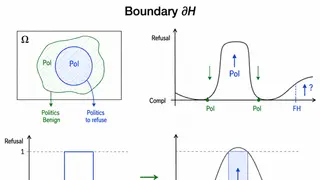
A blog post argues that AI safety systems should be designed to refuse specific harmful subsets of a topic rather than blocking the entire topic, enabling more precise and less restrictive behavior. The author, MultiverseComputingCAI, discusses the implications for open-weight models, emphasizing that overly broad refusals can undermine user trust and model utility. The piece calls for more granular safety mechanisms that distinguish between benign and harmful content within a given subject area.
The argument centers on a shift from blanket content restrictions to more surgical interventions. Rather than blocking an entire subject area, safety systems could identify and refuse only the specific harmful subtopics within it. This approach aims to preserve access to legitimate information while still preventing misuse.
For open-weight models, this distinction carries particular weight. These models, whose weights are publicly available, face scrutiny over their potential for harmful outputs. The author suggests that overly broad refusals in such models risk alienating users and reducing their practical value, as the models become less capable of handling benign requests within restricted categories.
This perspective could influence how developers design safety filters for open-weight models, potentially leading to more nuanced systems that better serve researchers and hobbyists. Users may benefit from fewer frustrating blocks on legitimate queries, while still receiving protection from genuinely harmful content. However, the approach may also raise concerns about whether granular systems can reliably distinguish benign from harmful subtopics, and whether such distinctions hold across different cultural or linguistic contexts. The balance between openness and safety remains a key tension in the AI community.