Beyond the Hype: Exploring the Hidden Frontiers of Cold Fusion Research
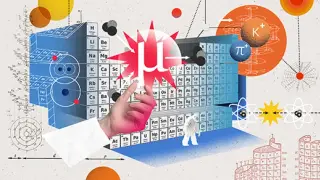
Despite its controversial history and past failures, cold fusion research continues to explore exotic atomic phenomena that challenge conventional nuclear physics. Scientists are investigating unusual particle interactions and low-energy nuclear reactions that, while not viable for energy production, offer insights into fundamental physical processes. This ongoing work pushes the boundaries of our understanding of matter and energy at the quantum level.
In October 2026, physicist George Musser published an essay titled “Is There More to Cold Fusion Than Failure and Fraud?” in Quanta Magazine, challenging the long-standing dismissal of cold fusion research. The piece reframes decades of skepticism by highlighting ongoing experiments that explore low-energy nuclear reactions (LENRs) and exotic atomic phenomena not intended for energy production. While cold fusion gained notoriety in 1989 following the controversial claims of Martin Fleischmann and Stanley Pons, subsequent failures to replicate results led to widespread scientific rejection. However, Musser points to a persistent but under-the-radar research program that continues to investigate anomalous particle interactions in materials like palladium and deuterium, often using advanced detection methods and AI-assisted data analysis to identify subtle signals. These experiments, though not yielding net energy gain, may reveal new quantum-level behaviors in condensed matter systems.
The background includes prior scientific skepticism rooted in the 1989 debacle, which led funding agencies and peer-reviewed journals to largely exclude LENR research. Yet, a small but dedicated community—comprising independent researchers, university labs, and private initiatives—has maintained interest through persistent data collection and theoretical modeling. Organizations like the International Society for Condensed Matter Nuclear Science (ISCMNS) and select institutions in Japan, Italy, and the U.S. continue to support this work, driven by curiosity about fundamental physics rather than energy applications. What remains unresolved is whether these observed anomalies are reproducible under controlled conditions or if they stem from experimental artifacts. The next steps may involve larger-scale collaborations, standardized protocols, and AI-driven pattern recognition to sift through noise—potentially leading to new insights into quantum confinement or nuclear tunneling in non-traditional environments.
The article could reshape public and scientific perceptions of fringe research by demonstrating that even discredited fields may harbor valuable, if unproven, scientific inquiry. While cold fusion has long been a cautionary tale about scientific overreach, Musser’s framing suggests that dismissing entire domains based on past failures may hinder discovery. This narrative may encourage greater openness in funding and peer review for high-risk, high-reward physics research. Institutions like DARPA or the DOE might reconsider supporting exploratory projects if they are framed as tools for advancing fundamental knowledge rather than energy solutions. A comparable precedent is the early reception of quantum mechanics—initially met with skepticism and resistance before revolutionizing technology. What to watch for next is whether AI-assisted analysis, increasingly used in physics, will help validate or debunk LENR signals, potentially leading to new theoretical models or experimental standards. The broader impact may be a cultural shift toward valuing scientific curiosity over immediate utility.