Nvidia's Vera CPUs Now Live in Oracle Cloud, Showing Major Memory Bandwidth Advantages
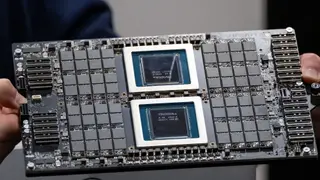
Nvidia’s Vera CPUs have entered general availability on Oracle Cloud Infrastructure’s Superclusters, marking a significant step in their standalone deployment within a major hyperscaler. Independent testing reveals Vera’s memory bandwidth far exceeds that of dual Xeon 6 servers, highlighting its strength in data-intensive workloads. This move underscores Nvidia’s expanding role beyond GPUs into high-performance computing infrastructure.
On October 28, 2026, Nvidia’s Vera Rubin NVL72 rack and standalone Vera CPUs became generally available on Oracle Cloud Infrastructure’s Superclusters, marking a pivotal moment in the chipmaker’s expansion beyond GPUs into high-performance CPU infrastructure. This deployment follows Google Cloud’s earlier announcement of Vera Rubin availability, but Oracle’s move stands out for emphasizing standalone Vera instances—distinct from GPU-centric or hybrid configurations—within a major hyperscaler’s multi-gigawatt data center environment. Independent testing on a local server revealed Vera’s memory bandwidth exceeding that of dual Intel Xeon 6980P systems by more than double, with results from the Stream benchmark showing significant advantages in triad operations due to Vera’s use of LPDDR5X-9600 memory and a distributed mesh caching topology. The chip’s design—featuring an 88-core monolithic die and OpenMP spread policy optimization—enables high bandwidth by minimizing contention, a key advantage for data-intensive agentic AI workloads involving large-scale database queries or document processing.
This development builds on prior reports of Vera deployments in neoclouds like Nscale, CoreWeave, and Nebius, but Oracle’s hyperscale integration signals broader industry acceptance. While AMD and Intel continue to lead in single-socket thread density—AMD’s upcoming EPYC Venice is expected to reach 512 threads—Vera’s architecture targets specific workloads where memory bandwidth and distributed compute matter more than raw core count. Ian Buck, Nvidia’s AI infrastructure lead, has acknowledged that a one-size-fits-all CPU won’t serve all needs, but Vera’s entry into OCI Superclusters opens the door for future generations. The focus on Python performance—critical for frameworks like CrewAI and LangGraph—further underscores Nvidia’s strategic alignment with agentic AI development. What remains unresolved is how Vera will perform at scale in production environments, whether its advantages translate to real-world latency and cost efficiency, and how competing CPU vendors may respond.
The deployment of Vera CPUs on Oracle Cloud could reshape the landscape of data center infrastructure, particularly for AI-driven applications that demand high memory throughput. While not a direct threat to x86 dominance, Vera’s success may encourage other hyperscalers to reconsider CPU architecture choices beyond traditional designs. Organizations relying on Python-based agentic frameworks—such as startups and research labs—may benefit from improved performance in complex reasoning loops, potentially accelerating innovation in autonomous systems. However, the broader impact depends on whether these gains translate into cost-effective scalability at scale, especially given the high power and cooling demands of such specialized chips. A comparable precedent is Intel’s early push with Xeon Phi, which offered high bandwidth but failed to gain mainstream traction due to software ecosystem limitations. Vera may avoid that fate if Nvidia continues investing in developer tools and ecosystem support. What to watch for next is how quickly third-party software vendors optimize for Vera’s unique architecture, and whether Oracle or other cloud providers begin offering tiered pricing models that reflect its performance premium.