Testing Large Language Models as Gatekeepers of Research Originality
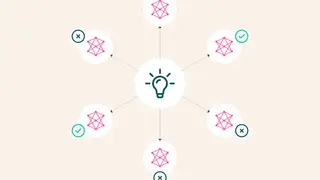
A new benchmark evaluates whether large language models can reliably assess the novelty of scientific research ideas, revealing mixed performance across different domains. The study highlights both the potential and limitations of LLMs in aiding academic innovation detection. Results suggest that while models can identify some obvious duplicates, they often fail on subtle or context-dependent distinctions.
This study introduces a benchmark designed to test how well large language models, including open-source variants like Llama, can detect whether scientific research ideas are novel. The evaluation spans multiple academic domains, revealing that while LLMs perform reasonably on straightforward cases of duplication, their accuracy drops significantly when assessing nuanced or context-sensitive originality. The findings underscore the challenges in automating scholarly innovation checks, particularly in fields where subtle refinements or interdisciplinary connections define novelty.
Such models could potentially assist researchers and publishers in screening submissions for originality, but their inconsistent performance may lead to false positives or missed duplicates. If adopted widely, this technology may influence peer review processes and academic publishing workflows, though its reliability remains uncertain. Institutions and authors may rely on it for preliminary checks, but human oversight would still be essential to avoid undermining scholarly integrity.