InOrbit's OpenRobOps offers a standards-based foundation for robot fleet management
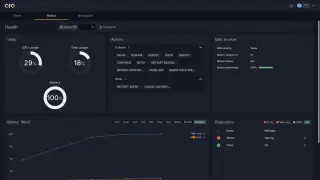
InOrbit has released OpenRobOps, an open-source platform for robot fleet operations that serves as a reference implementation for the ISO 21423 standard. The software provides a production-grade foundation for developers to manage fleets without building custom back ends. It includes features such as high-throughput telemetry and real-time spatial tracking.
OpenRobOps is positioned as a direct answer to the “build trap” that slows many robot makers, who otherwise spend years on custom back-end systems. Its design emphasizes practical deployment: telemetry pipelines that tolerate poor network conditions, live spatial visualization, and a locking mechanism for safe teleoperation. The platform also supports configuration-as-code, letting teams manage alerts and metrics through standard Git workflows, and offers an edge-to-cloud hybrid architecture for air-gapped or on-premises use.
The software includes native adapters for Open-RMF, an existing multi-fleet traffic coordination system, and is built around the forthcoming ISO 21423 standard for industrial mobile robot communication. InOrbit’s CEO notes the foundation applies broadly—to wheeled, legged, or other robot forms—and aims to let smaller firms offer complete fleet management without reinventing core infrastructure.
OpenRobOps could lower the barrier for smaller robotics companies to deliver professional fleet management, potentially accelerating adoption of AMRs in warehouses and factories. If widely adopted, it may reduce vendor lock-in and encourage interoperability across heterogeneous fleets, benefiting end users who currently juggle proprietary systems. However, reliance on an open-source foundation also implies shared maintenance and security responsibilities, which could create uneven support for less-resourced teams. The standard’s success will depend on community uptake and industry trust.